

Outer Banks, North Carolina, August 28, 2025
News Summary
Coastal erosion and storm-related damages on North Carolina’s Outer Banks have soared to over $43 million in highway maintenance costs since 2012. Severe storms, impacting even from afar, have exacerbated the issues of erosion, greatly affecting local communities like Rodanthe. The region’s geographic vulnerability and the intensifying effects of climate change underline the urgent need for effective long-term strategies to combat these challenges.
Outer Banks, North Carolina: Coastal Erosion and Storm Impact Costs Soar
Coastal erosion and the damages caused by storms on North Carolina’s Outer Banks have reached alarming levels, costing over $43 million in highway maintenance since 2012. This staggering figure highlights the unique vulnerabilities of the islands, especially as climate change continues to intensify storm activity in the region.
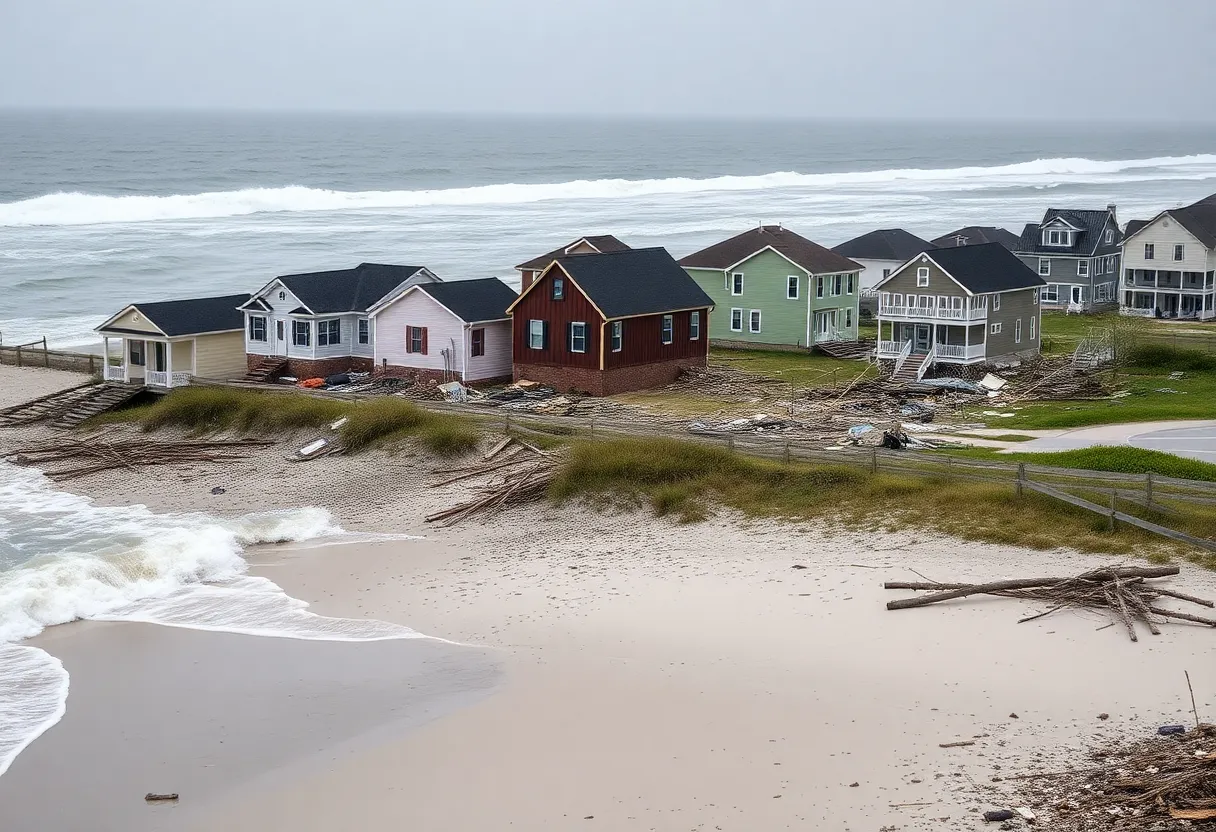
Storms can severely impact the Outer Banks even if they are positioned far offshore. For instance, Hurricane Joaquin in 2015 caused $2.3 million in damages while tracking over 500 miles east of Hatteras, North Carolina. Closer storms, like Hurricane Erin, resulted in waves that led to coastal flooding, prompting the closure of Highway 12 for three days. This two-lane road, which runs along the narrowest stretches of the islands, has seen maintenance costs soar due to repeated storm damage.
On average, maintaining Highway 12 costs about $1 million annually. Major storm events have exacerbated this financial burden significantly. For example, Hurricane Sandy in 2012 caused nearly $30 million in damages to the highway, while Hurricane Irene the previous year resulted in an additional $11 million in damages. Following these challenging years, a costly detour was established to permanently reroute Highway 12, involving a $145 million investment in a 2.4-mile bridge that was completed between 2018 and 2022.
Impact on Local Communities
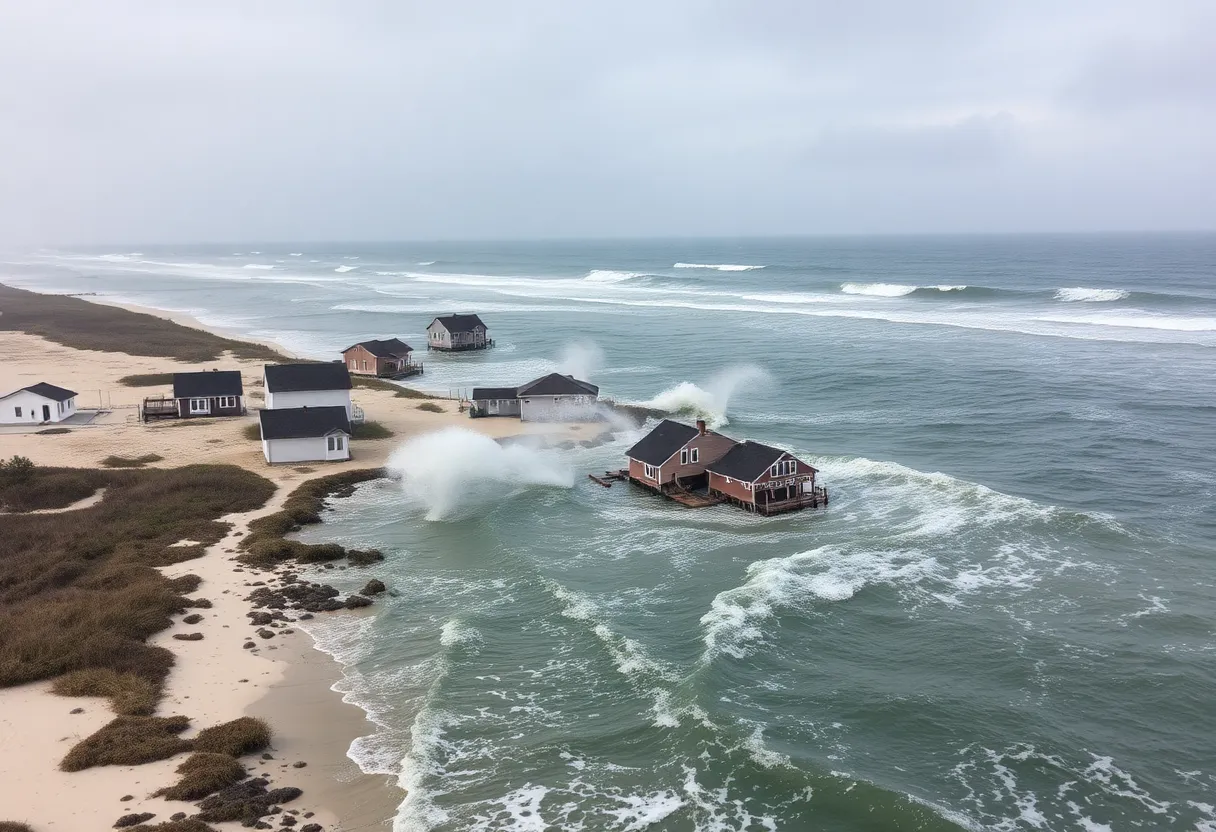
The effects of coastal erosion can be seen acutely at the community level. In Rodanthe, NC, eleven homes have collapsed since 2020 primarily fueled by severe storms, with two additional homes demolished as part of a pilot program aimed at preventing further collapse. Historic satellite images from 2016 indicate that only one home remains, a stark contrast to the seven homes that stood in 2009.
Rodanthe has faced devastating beach erosion, losing over 675 feet of beach since 1980, averaging around 16.9 feet per year. This relentless erosion has led to approximately half to two-thirds of land parcels now being underwater, with some areas like Corbina Drive seeing parcels completely submerged. The remaining home in Rodanthe, built in 1987, was originally set hundreds of feet away from the waterline.
Geographical Vulnerability
The geographic characteristics of the Outer Banks heighten their susceptibility to both storm surges and ocean impacts, with some points of land being only 300 feet wide. The region also lacks permanent protective infrastructure, such as seawalls, and instead relies on sandbagged dunes for temporary defense against rising waters. Eastern North Carolina’s positioning further increases its vulnerability to devastating storms, including hurricanes and nor’easters.
Moreover, climate change exacerbates these issues, contributing to the ongoing erosion and increasing the intensity of hurricanes affecting the southeast U.S. coast. As storms grow stronger and more frequent, the economic and infrastructural implications for the Outer Banks continue to mount.
Conclusion
The struggle against coastal erosion and the impact of severe storms remains a significant challenge for North Carolina’s Outer Banks. As maintenance costs escalate and natural landscapes transform, it highlights the urgent need for long-term strategies and solutions to safeguard the communities and infrastructure in this vulnerable region.
FAQ
What impact do storms have on the Outer Banks?
Storms can cause significant damage, even if they are far offshore. For instance, Hurricane Joaquin caused $2.3 million in damages while located over 500 miles away from Hatteras.
How much has been spent on maintaining Highway 12 due to storm damage?
Since 2012, over $43 million has been spent on maintaining Highway 12, with regular maintenance averaging $1 million annually.
What has been the rate of beach erosion in Rodanthe?
Rodanthe has lost over 675 feet of beach since 1980, averaging about 16.9 feet per year.
Key Features
| Feature | Details |
|---|---|
| Hurricane Joaquin (2015) | $2.3 million in damages, 500 miles offshore |
| Hurricane Sandy (2012) | $30 million in highway damages |
| Hurricane Irene (2011) | $11 million in damages |
| Highway 12 Maintenance Costs | Over $43 million since 2012 |
| Rodanthe Beach Erosion | 675 feet lost since 1980 |
Deeper Dive: News & Info About This Topic
HERE Resources
N.C. Highway 12 Reopens for Travel After Hurricane Erin
Hatteras Island Residents Return as N.C. Highway 12 Reopens
N.C. 12 Reopens Following Hurricane Erin Impact
Hurricane Erin Impacts North Carolina’s Outer Banks
Urgent Beach Hazards Statement Issued for Outer Banks
Hatteras Island, North Carolina Faces Hurricane Erin’s Aftermath Ahead of Labor Day Weekend
Hurricane Erin Causes Significant Damage in Outer Banks
Severe Coastal Erosion Threatens Homes and Infrastructure in Outer Banks
Hurricane Erin Leaves Significant Impact on North Carolina’s Outer Banks
N.C. Highway 12 Reopens After Hurricane Erin Cleanup
Additional Resources
- AccuWeather: Why North Carolina’s Outer Banks Get So Much Damage from So Many Storms
- Wikipedia: Outer Banks
- UPI: North Carolina’s Outer Banks Take Brunt of Many Storms
- Google Search: Coastal Erosion Outer Banks
- AP News: Hurricane Erin and the Outer Banks
- Encyclopedia Britannica: Climate Change
- New York Times: Highway 12 and Hurricane Erin in North Carolina
- Google News: North Carolina Hurricane Impacts


Author: STAFF HERE OUTER BANKS WRITER
The OBX STAFF WRITER represents the experienced team at HEREOBX.com, your go-to source for actionable local news and information in the Outer Banks, Dare County, and beyond. Specializing in "news you can use," we cover essential topics like product reviews for personal and business needs, local business directories, politics, real estate trends, neighborhood insights, and state news affecting the area—with deep expertise drawn from years of dedicated reporting and strong community input, including local press releases and business updates. We deliver top reporting on high-value events such as the Outer Banks Seafood Festival, NC VIP Fishing Tournament, and NCBBA Red Drum Tournament. Our coverage extends to key organizations like the Outer Banks Chamber of Commerce and Outer Banks Community Foundation, plus leading businesses in tourism, retail, and hospitality that power the local economy such as Kitty Hawk Kites, Outer Banks Mall, and Avon Fishing Pier. As part of the broader HERE network, including HEREAsheville.com, HERECharlotte.com, HEREGreensboro.com, and HERERaleigh.com, we provide comprehensive, credible insights into North Carolina's dynamic landscape.