
Outer Banks, North Carolina, September 9, 2025
News Summary
Bucktown, North Carolina faces severe coastal erosion, with homes collapsing into the ocean and communities at risk. Rising sea levels and intensified storms contribute to alarming erosion rates. Efforts to combat this crisis include beach restoration projects and legislative initiatives to support affected homeowners, but challenges remain as the environment shifts.
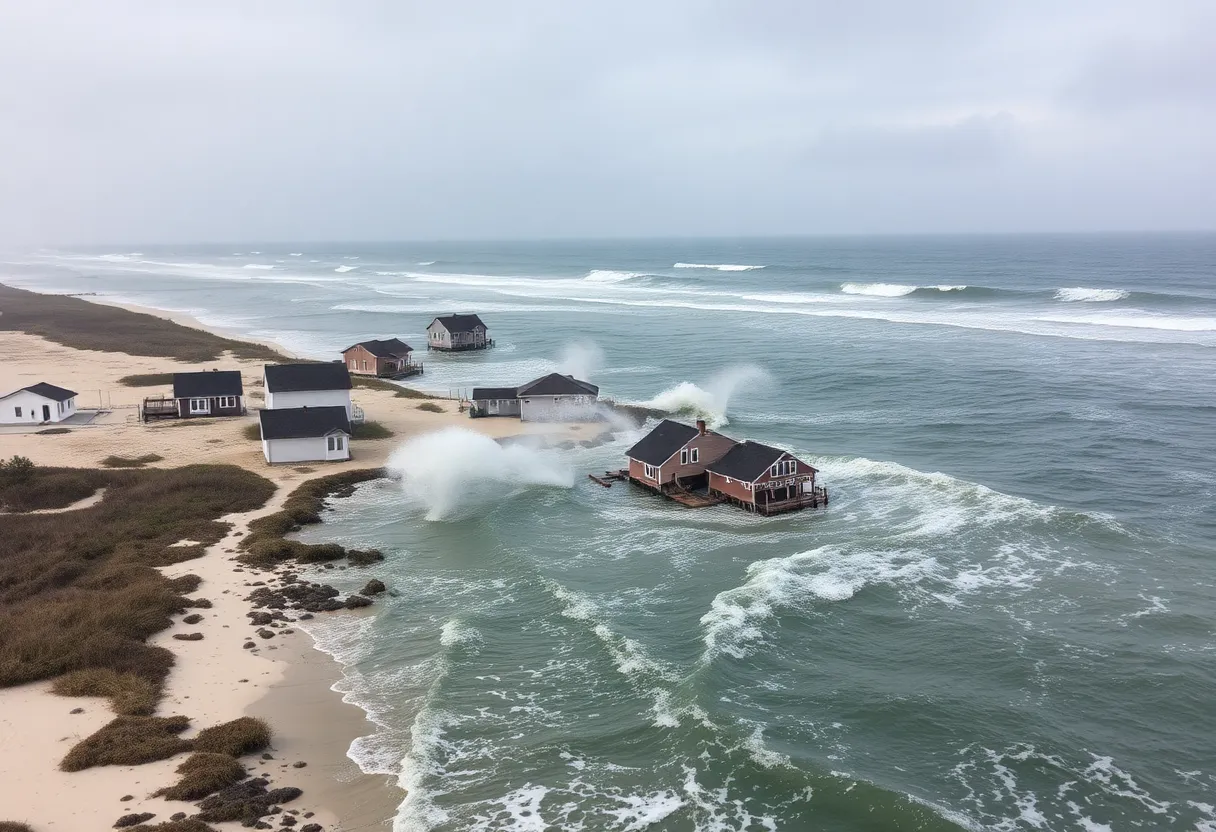
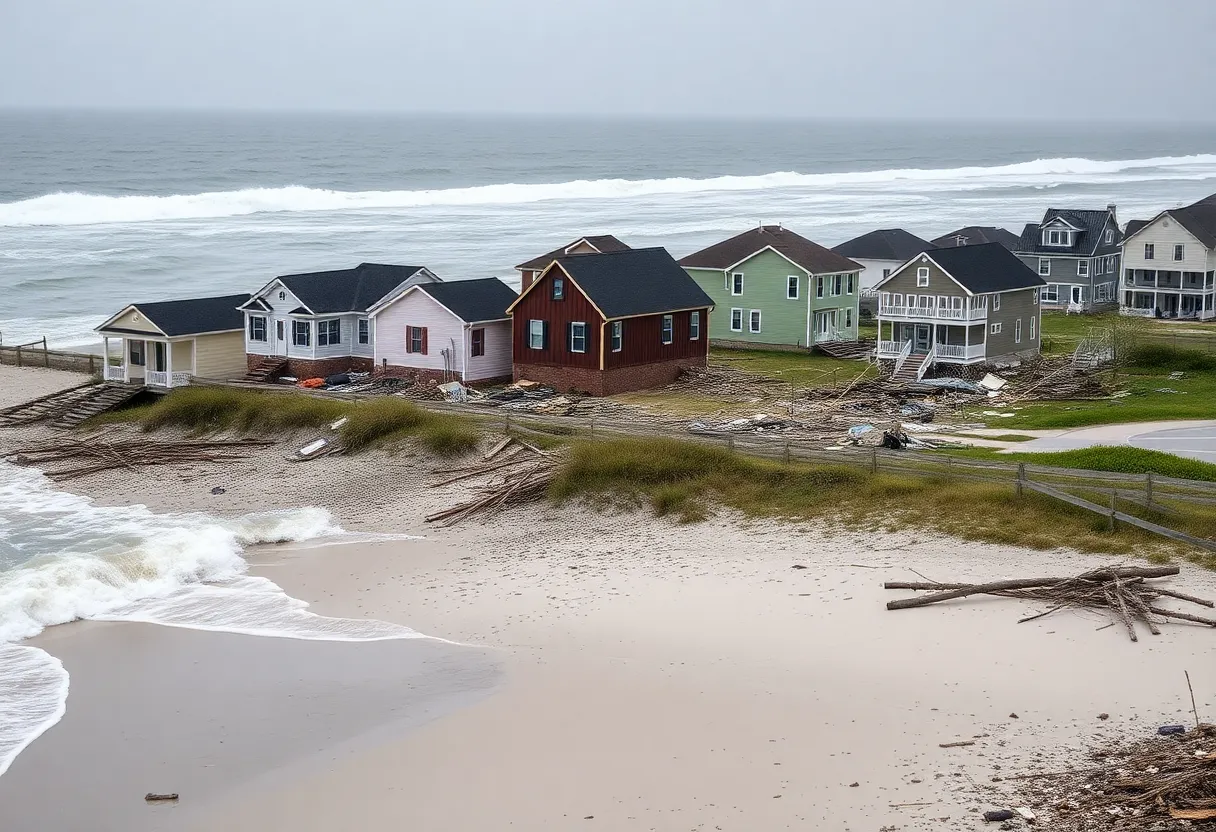
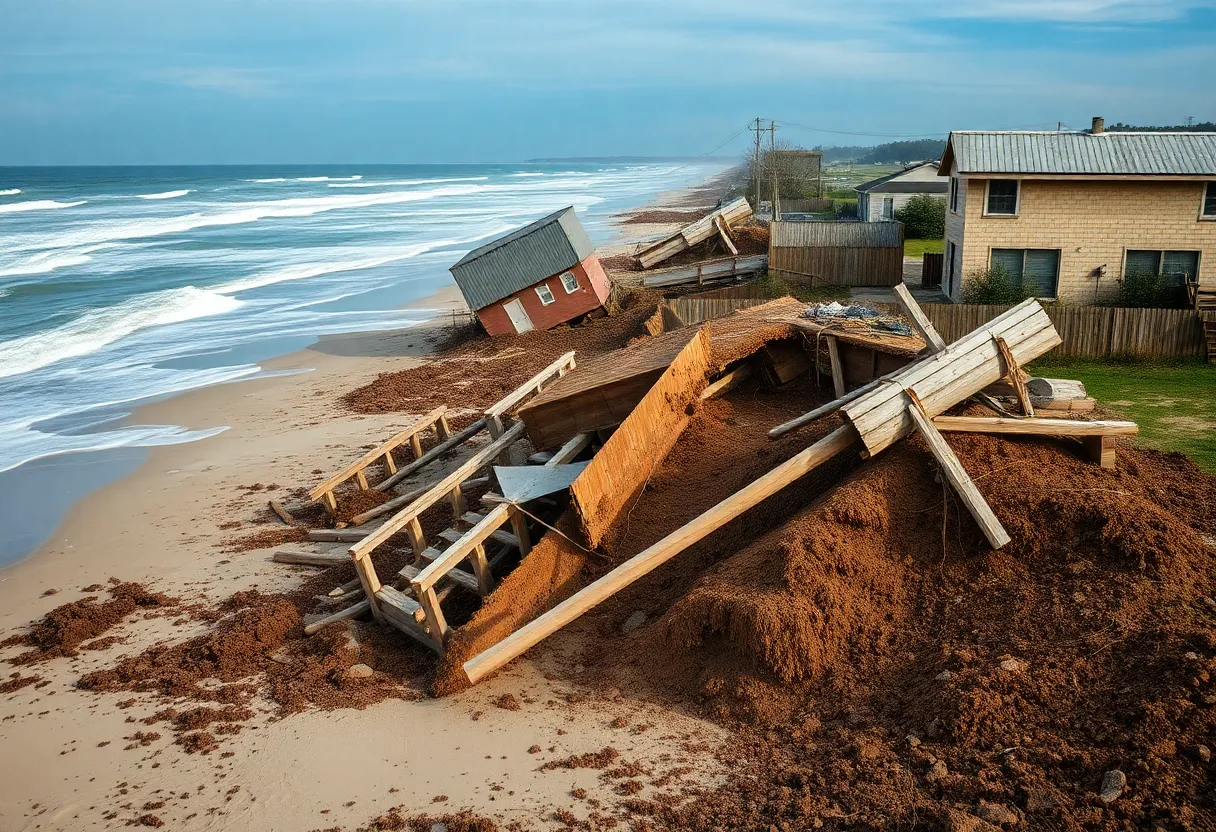
Bucktown, North Carolina – Coastal erosion is rapidly escalating on North Carolina’s Outer Banks, threatening homes and entire communities. Recent observations reveal that significant shoreline erosion has resulted in multiple homes collapsing into the ocean, showcasing the dire need for action amid rising sea levels and increasing storm intensity.
Surfer Brett Barley has highlighted these alarming changes through a video recreation from 2014, documenting the severe erosion of Hatteras Island. Since 2020, erosion has claimed at least ten homes on Hatteras Island, where erosion rates have reached alarming levels exceeding 15 feet annually. Hidden beneath stunning coastal vistas is a troubling trend that could reshape the landscape of North Carolina’s barrier islands.
Sea levels along the state’s coast have seen a rise of up to 11 inches since 1950, accelerating at a pace of one inch every two years, placing additional stress on coastal integrity. Tidal flooding in certain areas has doubled since the turn of the millennium, with projections suggesting that Beaufort will experience an average of 60 days of high-tide flooding annually by 2050 if current trends continue.
Coastal communities are responding to this crisis with beach restoration projects aimed at replenishing eroded beaches. Techniques, such as pumping sand from offshore, are being explored as potential solutions. The North Carolina Coastal Federation promotes the adoption of “living shorelines,” which comprise natural materials like oyster shells. This approach aims not only to counteract erosion but also to foster marine habitats by absorbing wave energy.
In the face of escalating coastal hazards, individual contributions to climate mitigation efforts are encouraged, such as utilizing energy-efficient appliances and reducing overall energy consumption. Further legislative efforts are being made, including the introduction of a bipartisan bill known as the Preventing Environmental Hazards Act. This proposed legislation seeks to aid homeowners with oceanfront properties, which lack coverage from standard homeowners’ insurance policies in cases of erosion damage.
Currently, the National Flood Insurance Program offers limited assistance, only compensating homeowners after complete destruction of properties, which often leaves them vulnerable as they wait for support that may come too late. The Outer Banks has been significantly impacted, with increased erosion leading to public health and safety concerns, as debris from collapsing homes poses a hazard to marine and coastal environments.
Local leaders in Ocean Isle Beach have reported severe erosion issues and are utilizing sandbags to protect homes, while they await federal assistance for beach restoration. Oceanographer Reide Corbett has pointed out the inherent vulnerability of barrier islands to climate change, indicating that freshly pumped sand can erode more rapidly due to rising sea levels and intensified storms.
In response to these challenges, the National Park Service is implementing strategies that include the buyout and demolition of homes at high risk of collapse, aiming to minimize debris pollution in surrounding waters. However, the mixed feelings of residents reflect a struggle between human habitation and the natural dynamics inherent in barrier islands, raising questions about the future of their communities.
Frequently Asked Questions
What is causing the coastal erosion on North Carolina’s Outer Banks?
Coastal erosion on the Outer Banks is primarily caused by rising sea levels, increased storm intensity, and tidal flooding, which has doubled since the year 2000.
How fast are the sea levels rising along North Carolina’s coast?
Sea levels along North Carolina’s coast have risen up to 11 inches since 1950 and are currently increasing at a rate of one inch every two years.
What measures are being taken to combat coastal erosion?
Communities are exploring various beach restoration projects, such as pumping sand from offshore, implementing “living shorelines” with natural materials, and utilizing sandbags for immediate protection.
Key Features of Coastal Erosion on the Outer Banks
| Feature | Detail |
|---|---|
| Current Erosion Rate | Exceeds 15 feet per year |
| Sea Level Rise Since 1950 | Up to 11 inches |
| Projected Tidal Flooding | 60 days per year by 2050 in Beaufort |
| Homes Lost Since 2020 | 10 homes on Hatteras Island |
| Community Response Strategies | Sand pumping and living shorelines advocated |
Deeper Dive: News & Info About This Topic
HERE Resources
Outer Banks Faces High Rip Current Risk as Hurricane Erin Approaches
Ocracoke, North Carolina Faces Aftermath of Hurricane Erin
Hurricane Erin Triggers Evacuations and Flood Warnings in Nags Head
Newport, North Carolina Faces Life-Threatening Rip Currents
Hurricane Erin Approaches Outer Banks, NC: Tropical Storm Watch in Effect
North Carolina’s Outer Banks Devastated by Hurricane Erin
Hurricane Erin Triggers Life-Threatening Coastal Conditions in North Carolina
Hurricane Erin Triggers High-Risk Conditions Along North Carolina’s Outer Banks
Hurricane Erin Triggers Evacuations in Hatteras, NC
Homes in Rodanthe Threatened by Hurricane Erin and Erosion
Additional Resources
- The Cool Down: Coastal Erosion in North Carolina
- WRAL: Hurricane Erin Aftermath on Wrightsville Beach
- ABC11: North Carolina Bill on Coastal Erosion
- CBS News: Coastal Erosion on North Carolina’s Barrier Islands
- News Observer: Coastal Erosion Challenges in North Carolina
- Wikipedia: Coastal Erosion
- Google Search: North Carolina Coastal Erosion
- Google Scholar: North Carolina Coastal Erosion
- Encyclopedia Britannica: Coastal Erosion
- Google News: North Carolina Coastal Erosion