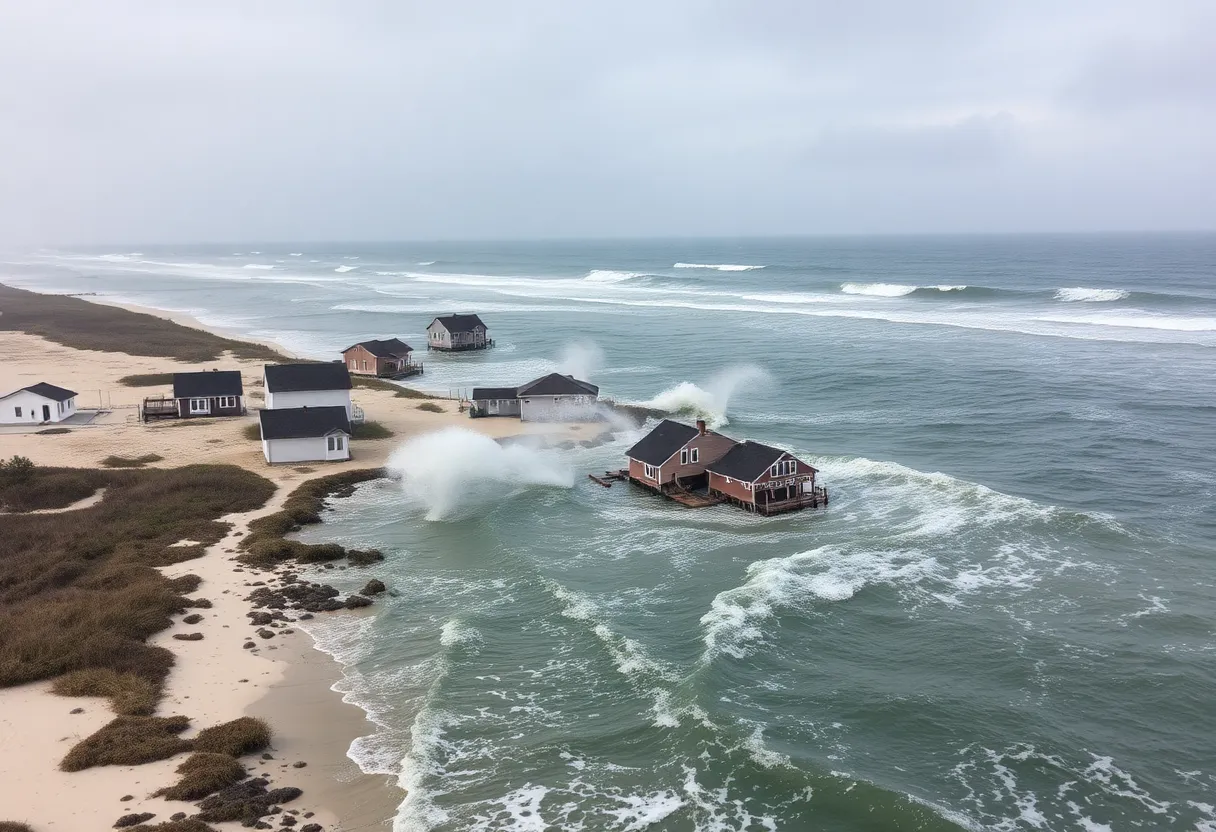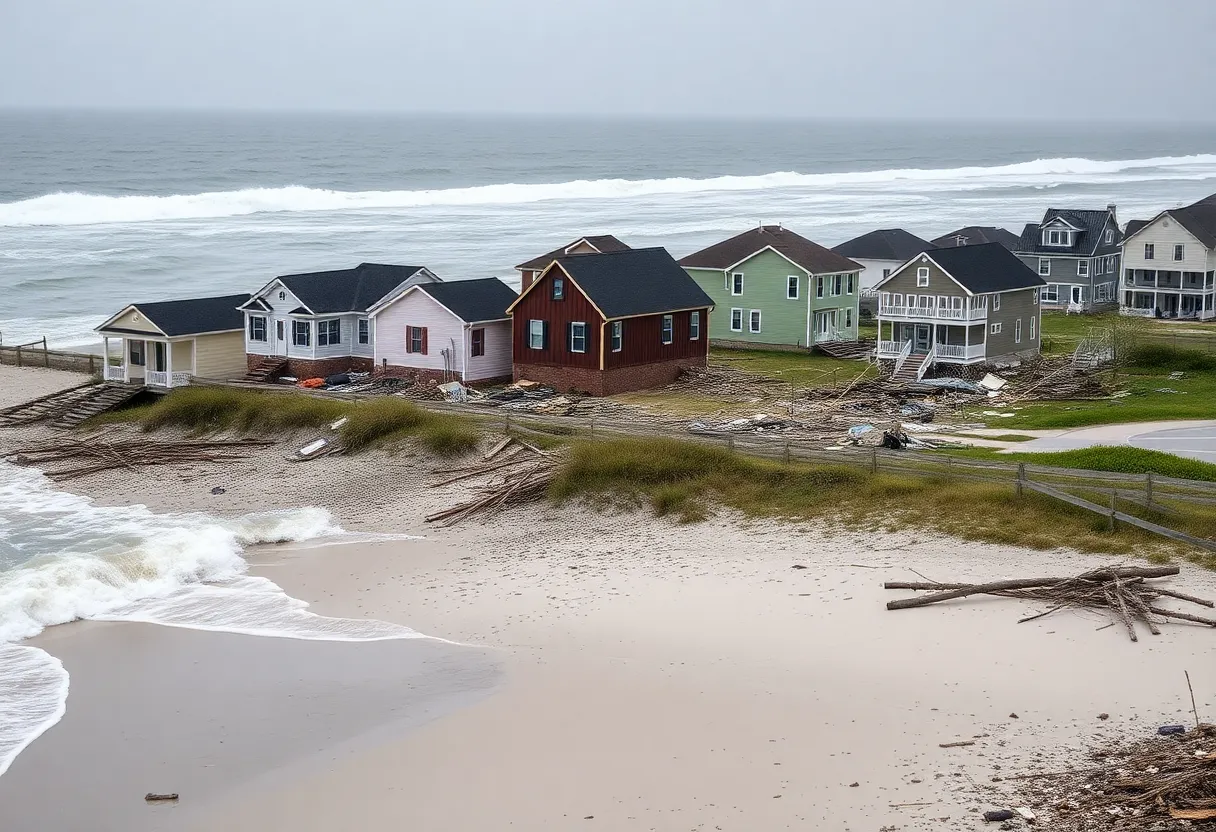

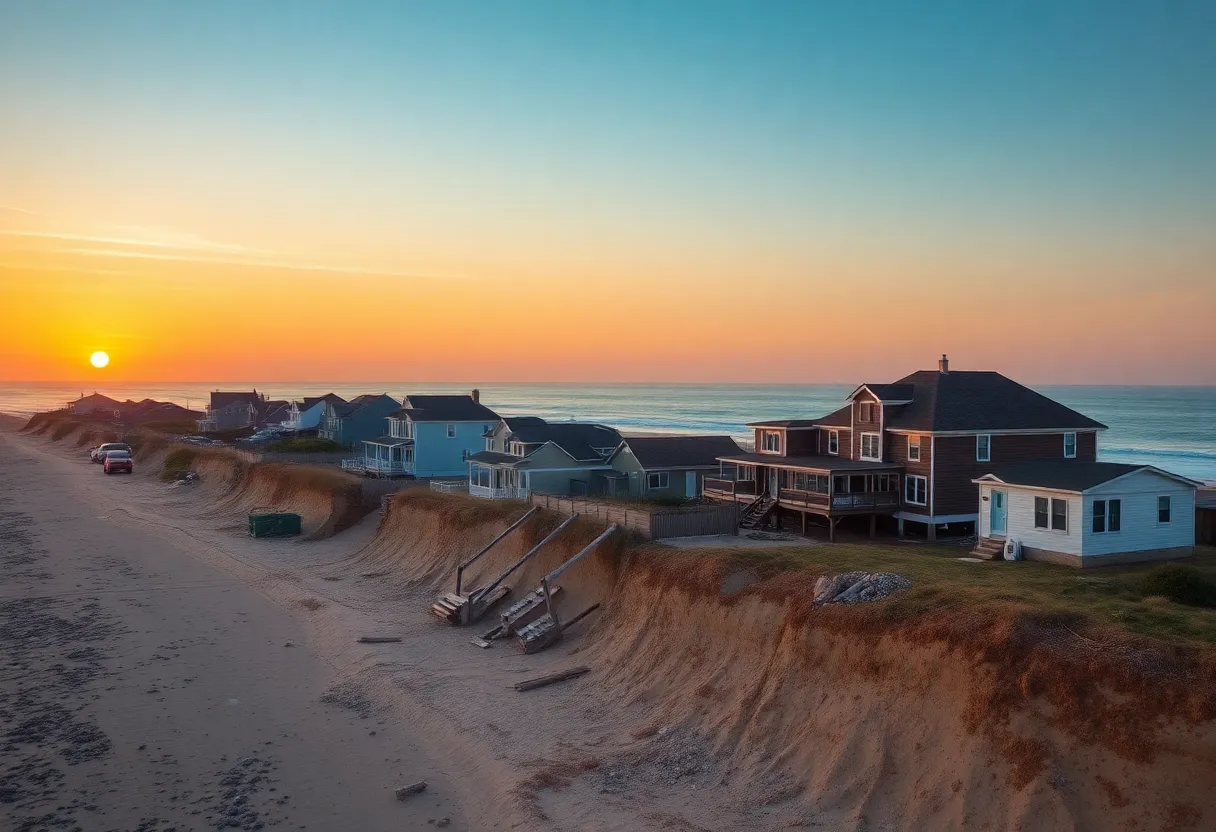
Rodanthe, North Carolina, September 10, 2025
News Summary
Residents in Rodanthe, North Carolina, confront significant challenges due to rising sea levels and severe coastal erosion threatening their oceanfront properties. Advised to relocate, homeowners struggle with bureaucratic hurdles and complicated regulations that delay their relocation processes. Financial implications are substantial, with costs exceeding $300,000. Legislative efforts, such as the Preventing Environmental Hazards Act, aim to provide pre-collapse compensation to support homeowners. The urgency of relocating is heightened by multiple house collapses in the area, leading to increased concerns for public safety and environmental stability.
Rodanthe, N.C. – Homeowners in Rodanthe, North Carolina, are facing significant challenges as rising sea levels and severe coastal erosion threaten their oceanfront properties. Local residents have been advised to relocate their homes to avoid natural disasters. While some homeowners have begun the relocation process, bureaucratic hurdles and complicated regulations are causing substantial delays.
One such homeowner, Betty Jane Saylor, has owned her property in Rodanthe since 2014. Her home was severely damaged during Hurricane Erin, which destroyed her pool, fence, and hot tub. Saylor initiated the moving process in late 2024, initially expecting it to be completed within a few months, but has since grappled with a lengthy approval process. The relocation plans have been encumbered by the Coastal Area Management Act, which necessitates obtaining multiple permits, especially because of wetland considerations.
The Division of Coastal Management confirmed Saylor’s application was deemed complete in mid-May but did not receive final approval until August 25. The typical waiting period for final approval from the United States Army Corps of Engineers is about 60 days, but delays are common, leaving many homeowners in limbo.
The financial implications of moving are substantial. Saylor and her family estimate the total cost of relocating and restoring their property will exceed $300,000. This situation is further complicated by the limitations of the National Flood Insurance Program (NFIP), which only provides insurance payouts after a home is completely destroyed, therefore placing the financial burden squarely on homeowners taking proactive measures.
Legislatively, the Preventing Environmental Hazards Act has been introduced as a response to the struggles homeowners face concerning coastal erosion. This bipartisan legislation aims to allow homeowners to receive pre-collapse compensation, providing up to 40% of a home’s value before a potential disaster strikes. However, homeowners must demonstrate that they have taken necessary actions to qualify for this potential aid.
The urgency of the situation has increased alarmingly, with at least eleven houses collapsing into the ocean in the Outer Banks since 2020, raising environmental and public safety concerns. Recent reports indicate that there have been seven house collapses in Rodanthe over the past four years, the most recent occurring in 2024. Homeowners like Gus Gusler are urging the need to relocate properties inland due to ongoing erosion rates exceeding 15 feet per year.
Gusler plans to move his house approximately 136 feet inland by January 2025 to mitigate future risks. Local authorities have also proposed a beach nourishment program to counter erosion, estimated to cost around $30 million, but have been unsuccessful in securing funding for this project. Consequently, homeowners are left managing relocations with scant assistance from local or state entities.
The community has expressed frustration over the slow processes and hefty costs involved in moving their homes away from the shore. Recent incidents, such as the collapse of a property on Corbina Drive, serve as ongoing reminders of the risks homeowners are facing. Through these challenges, residents are actively seeking support from state and federal officials to address the urgent threats posed by coastal erosion.
The situation in Rodanthe reflects broader challenges numerous coastal communities face regarding housing safety and environmental changes. As homeowners continue to navigate the complex and often slow relocation processes, the necessity for timely legislative and infrastructural solutions becomes increasingly critical.
FAQ
What is the main issue facing homeowners in Rodanthe, N.C.?
Homeowners in Rodanthe are struggling with coastal erosion and are being urged to relocate their properties. However, they are facing delays due to bureaucratic red tape and complicated permit processes.
How long does the relocation approval process typically take?
The waiting period for final approval from the United States Army Corps of Engineers typically takes about 60 days, but delays are common, which can extend the timeline significantly.
What financial assistance is available for homeowners relocating due to erosion?
The National Flood Insurance Program currently does not provide assistance for proactive relocations. However, the Preventing Environmental Hazards Act could enable homeowners to receive up to 40% of their home’s value prior to a collapse, subject to conditions.
What has been the impact of home collapses in the area?
There have been eleven homes that have collapsed into the ocean in the Outer Banks since 2020, which raises significant public safety and environmental concerns. In Rodanthe alone, seven houses have collapsed in the past four years.
Deeper Dive: News & Info About This Topic
HERE Resources
Coastal Erosion Threatens Homes on North Carolina’s Outer Banks
Corolla, North Carolina: A Leader in Sustainable Tourism
Rodanthe Residents Brace for Hurricane Erin’s Fury
Hatteras Island Evacuation Orders Lifted After Hurricane Erin
Hurricane Erin Threatens Oceanfront Homes in Rodanthe, NC
Coastal Erosion Threatens Outer Banks Communities
Housing Survey Launched for Outer Banks Workers
Rodanthe, N.C.: Homes in Danger Due to Hurricane Ernesto
Threats to North Carolina’s Highway 12: A Growing Concern
Outer Banks Faces Workforce Housing Crisis
Additional Resources